Louisiana Community Empowered with Fresh Supply to Combat Saltwater Invasion
Plaquemines Parish Backed by Army Corps of Engineers
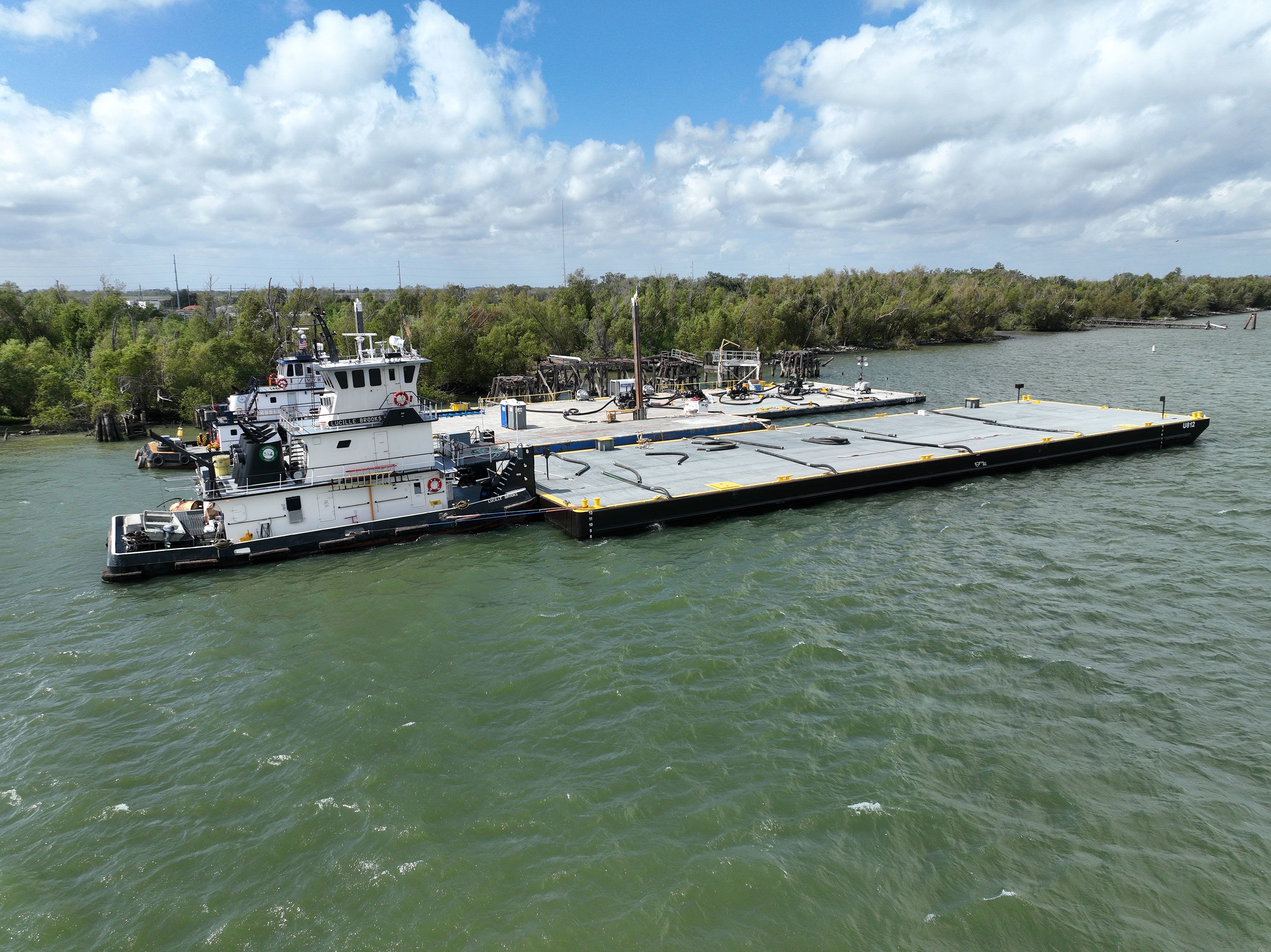
Plaquemines Parish, Louisiana, received more than a million gallons of freshwater delivered via colossal barges last Monday, as the community endeavours to tackle escalating saltwater intrusion threatening their drinking supply. The Army Corps of Engineers have initiated this emergency action, planning to consistently transport water until the flow of the Mississippi River recovers its strength to repel the salt-laden sea back to the Gulf of Mexico.
"The current situation could potentially extend until January," revealed Parish President Keith Hinkley. The local community foresees tough times ahead due to the lack of any forthcoming substantial rainfall around the upper Mississippi, Missouri, and Ohio Basins, further exacerbating the crisis.
An Ongoing Struggle for Survival Amid Imminent Threat
Already causing a staggering loss of $33 million, the saltwater intrusion crisis poses grave challenges to not only Plaquemines Parish, but also New Orleans. The region, heavily dependent on the aid provided by state and federal agencies, is beginning preparations to confront this issue on an annual basis, since the arrival of the next rainfall may not entirely solve the troubling problem.
Looking to Desalination for Greater Hope
The parish is urging the state to consider investing in desalination technology, which despite being more prevalent in arid regions such as Israel, could present a plausible solution in the swampy locales of Louisiana. This would address the intrusion of saline wedges recurring almost every decade since the late 80s, and more alarmingly, occurring now in consecutive years.
The Climatic Changes Outpacing Adaptation Efforts
In the wake of retired Lieutenant General Russel Honoré's shocking revelation of the Mississippi's historically low river levels, concerns about creeping saltwater from the Gulf potentially jeopardising drinking and irrigation supplies have heightened. The unchecked advancement of saline water could result in the sabotaging of critical infrastructure including the city's residual lead pipes and domestic appliances.
Honoré warned the saltwater intrusion could have a far-reaching impact on various areas like public health, the shipping industry, and the efficient operation of household appliances. "Should the river's level drop further, the shipping of cargo, which constitutes a crucial component of national trade, may be hit." This would directly affect the supply of essentials such as grain and petrochemicals that underpin the functionality of industries worldwide.
Clamor For Rain Begins
With the Army Corps of Engineers support, Plaquemines Parish is hopeful about sourcing water from areas unaffected by the salt and effecting desalination initiatives. Ultimately, rainfall will dictate the success of these efforts, as they ardently hope for a wetter end-year, typically witnessed during El Niño years.
However, proactive response continues while authorities also anticipate future challenges. Honoré predicts unfavorable scenarios where the local population could depend on desalinated water, barge-delivered water, or even resort to bottled water consumption should the intruding saltwater breach more areas.
One solution seems to be in establishing desalination plants in every parish, as suggested by Honoré. Born and raised in Louisiana, Honoré reminisced about times when the local populace prayed for an absence of hurricanes. Now, they found themselves praying for rain to cope with the accelerating rate of climate change. "Our rate of adaptation is falling behind the speed of climate change," he said.
Comments
Post a Comment